


Why Agricultural Science Journals Need a Modern Manuscript Submission and Peer Review System
Why Agricultural Science Journals Need a Modern Manuscript Submission and Peer Review System
Agricultural research is undergoing a significant transformation. Emerging disciplines such as precision agriculture, digital farming, climate-smart agriculture, agricultural analytics, remote sensing, and sustainable agrosystems are generating an unprecedented volume of scholarly research. Universities, research institutes, scientific societies, and independent publishers are responding by launching new agricultural journals and expanding existing publications.
However, while research methodologies and scientific technologies continue to evolve, many journals still rely on outdated editorial management practices. Manuscripts are frequently handled through email exchanges, spreadsheets, and fragmented workflows that create delays, increase administrative burdens, and negatively affect the experience of authors, reviewers, and editors.
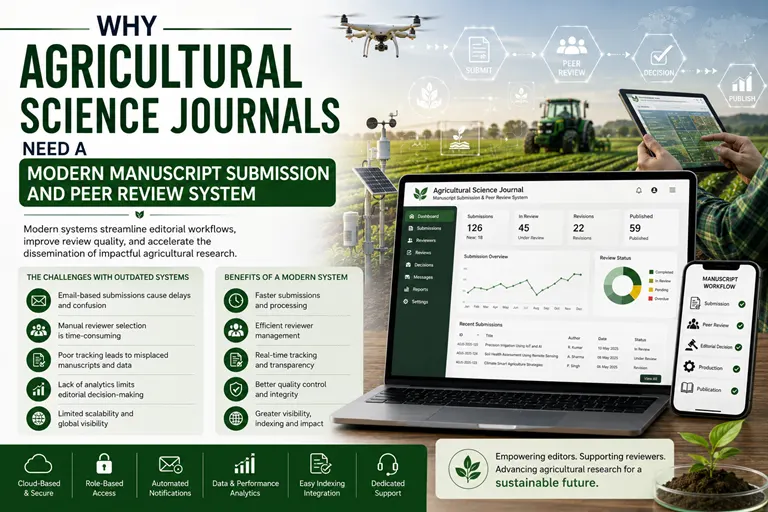
In today's competitive scholarly publishing environment, a modern manuscript submission and peer review system is no longer a luxury. It has become an essential requirement for agricultural science journals seeking efficiency, credibility, scalability, and international visibility.
The Journal of Agrosystems and Analytics (JAA) recognizes the importance of robust publishing infrastructure and supports the adoption of technologies that strengthen scholarly communication and improve editorial excellence.
The Changing Landscape of Agricultural Research Publishing
Agricultural science has become increasingly interdisciplinary. Modern journals now publish research in areas such as:
- Precision agriculture
- Artificial intelligence in farming
- Agricultural data analytics
- Crop modeling
- Remote sensing and GIS
- Sustainable resource management
- Agricultural biotechnology
- Climate adaptation strategies
- Environmental monitoring
- Smart farming technologies
These research areas often involve:
- International collaborations
- Multiple authors and institutions
- Large supplementary datasets
- Complex peer review requirements
- Increased expectations regarding publication speed
As submission volumes increase, traditional editorial workflows struggle to maintain efficiency.
The Limitations of Manual Journal Management
Many emerging journals still rely on manual processes such as:
- Email-based submissions
- Spreadsheet tracking
- Separate reviewer databases
- Manual reminder systems
- Individual file management
Although these methods may work during the early stages of a journal, they quickly become unsustainable as the journal grows.
Common Challenges Faced by Agricultural Journals
Delayed Editorial Decisions
Manual workflows often create bottlenecks that slow manuscript processing.
Lost or Misplaced Files
Managing submissions through email increases the risk of losing important documents and correspondence.
Reviewer Management Difficulties
Tracking reviewer invitations, deadlines, and reports manually can become highly inefficient.
Poor Author Experience
Authors increasingly expect professional submission systems that provide transparency and real-time updates.
Lack of Workflow Transparency
Editors may struggle to monitor manuscript progress and identify delays.
Limited Reporting and Analytics
Manual systems rarely provide actionable insights into journal performance.
Why Modern Manuscript Submission Systems Matter
A manuscript submission system centralizes every stage of the editorial process.
A modern platform typically manages:
- Author registration
- Manuscript submission
- Editorial screening
- Reviewer assignment
- Peer review management
- Revision tracking
- Final decisions
- Production workflows
- Publication management
The result is a more organized, efficient, and transparent publishing process.
Benefits of a Modern Manuscript Submission System
Improved Editorial Efficiency
Automation reduces administrative workload and allows editors to focus on scientific quality.
Faster Turnaround Times
Automated reminders and workflow tracking significantly improve processing speed.
Better Author Experience
Authors can:
- Submit manuscripts easily.
- Track progress online.
- Receive timely updates.
- Access decision histories.
A positive author experience often leads to repeat submissions and stronger journal reputation.
Enhanced Reviewer Management
Editors can:
- Search reviewer databases.
- Send invitations automatically.
- Monitor deadlines.
- Store reviewer histories.
Centralized Communication
All communications remain organized within a single platform.
Better Data Security
Modern systems provide secure document storage and access management.
Why Peer Review Systems Are Critical for Agricultural Journals
Peer review remains the foundation of scholarly publishing.
Agricultural journals often publish research that directly influences:
- Food security policies
- Environmental management
- Sustainable farming practices
- Climate adaptation strategies
- Agricultural innovations
Maintaining scientific integrity requires a rigorous and transparent review process.
Modern peer review systems support:
- Reviewer confidentiality
- Editorial oversight
- Revision management
- Decision consistency
- Ethical publishing standards
The Growing Complexity of Peer Review
Modern agricultural research often involves multidisciplinary expertise.
A manuscript may require reviewers with expertise in:
- Agronomy
- Statistics
- Data science
- Environmental science
- GIS and remote sensing
- Artificial intelligence
- Agricultural economics
A dedicated peer review platform simplifies reviewer identification and coordination.
Key Features Agricultural Journals Should Look For
User-Friendly Submission Interface
A simple and intuitive interface encourages author engagement.
Configurable Editorial Workflow
Different journals require different editorial processes.
Reviewer Database Management
Maintaining reviewer information improves editorial efficiency.
Automated Notifications
Automatic reminders help reduce delays.
Role-Based Permissions
Editors, reviewers, and authors should have appropriate access controls.
Manuscript Tracking Dashboard
Editors need real-time visibility into manuscript status.
Metadata Management
Proper metadata supports indexing and discoverability.
Mobile Accessibility
Researchers increasingly access journal systems through multiple devices.
Reporting and Analytics
Editorial reports assist with strategic planning and performance monitoring.
Why Agricultural Journals Are Moving Toward Digital Publishing Infrastructure
Several factors are driving modernization.
Increased Submission Volumes
Growing research output requires scalable systems.
Global Author Expectations
Researchers increasingly expect professional publishing experiences.
International Collaboration
Modern platforms facilitate communication across geographic boundaries.
Indexing and Accreditation Requirements
Many indexing services prefer journals with structured editorial systems.
Research Integrity Expectations
Publishing ethics and transparency standards continue to evolve.
How Modern Systems Improve Journal Reputation
A professional editorial system directly influences how a journal is perceived.
Benefits include:
- Faster publication timelines
- Improved author confidence
- Greater reviewer participation
- Better editorial consistency
- Increased submission rates
- Enhanced international visibility
Investing in publishing infrastructure often contributes to long-term journal growth.
Beyond Software: The Need for Publishing Support
Launching and managing a journal requires more than simply installing software.
Editors frequently need support with:
- Journal website development
- Workflow design
- ISSN readiness
- DOI implementation
- Publishing policies
- Technical management
- Long-term strategic planning
Many journal teams, particularly new publishers and academic institutions, do not have dedicated publishing specialists.
Why Integrated Journal Platforms Are Gaining Popularity
Modern publishing solutions increasingly combine:
- Journal website development
- Manuscript submission systems
- Peer review management
- Editorial workflows
- Technical support
- Publishing consultation
This integrated approach reduces complexity and allows editors to focus on research quality and journal development.
ScholarJMS: A Modern Solution for Agricultural Journals
ScholarJMS is a modern journal management platform designed to simplify scholarly publishing.
The platform supports:
- Journal website creation
- Manuscript submission management
- Peer review workflows
- Editorial decision tracking
- Publication management
- Publishing support services
For emerging agricultural journals, integrated platforms can significantly reduce technical burdens while improving operational efficiency.
Why ISSN and DOI Planning Should Be Part of the Workflow
Publishing infrastructure extends beyond manuscript management.
Successful journals also require:
- ISSN readiness
- Crossref DOI implementation
- Metadata standards
- Publication archiving
- Indexing preparation
Professional planning at an early stage helps avoid future challenges.
Journal Launch and Publishing Support
OJSCloud provides support for:
- Journal launch consulting
- OJS hosting and support
- OJS migration services
- ISSN consulting
- Publishing infrastructure planning
- Journal website development
Similarly, GetDOI assists journals with:
- Crossref DOI support
- Metadata preparation
- DOI workflow implementation
- Publishing consultation
Need Help Launching or Upgrading Your Journal?
We can help with:
- ScholarJMS journal website setup
- OJS migration services
- Manuscript submission system implementation
- Editorial workflow design
- ISSN consulting
- Crossref DOI support
- Agricultural journal launch guidance
WhatsApp: +91 82003 85143
WhatsApp Direct: https://wa.me/918200385143
Email: inquiry@ojscloud.com
The Future of Peer Review in Agricultural Publishing
The future of scholarly publishing is increasingly focused on:
- Workflow automation
- Data-driven editorial management
- Transparent peer review
- Reviewer recognition systems
- Research integrity initiatives
- Artificial intelligence-assisted workflows
Agricultural journals that adopt modern technologies will be better positioned to compete in an increasingly digital publishing environment.
Building Trust Through Transparent Publishing
The academic community is placing greater emphasis on transparency and research integrity.
Scholar9 supports transparent peer review ecosystems and research trust initiatives that help journals strengthen credibility and improve scholarly communication.
As agricultural research becomes increasingly global and interdisciplinary, maintaining trust and editorial excellence will remain essential.
Frequently Asked Questions
Why do agricultural journals need a manuscript submission system?
A submission system improves efficiency, reduces administrative burdens, and enhances the experience of authors, reviewers, and editors.
Can journals still manage submissions by email?
Small journals may initially use email, but this approach becomes increasingly difficult as submission volumes grow.
What are the advantages of an online peer review system?
Online systems improve transparency, reviewer management, communication, and editorial efficiency.
Do manuscript management systems help with indexing?
Yes. Structured workflows and metadata management can improve indexing readiness.
Can a journal migrate from manual workflows to a digital platform?
Yes. Many journals successfully transition to modern editorial systems as they expand.
Is publishing support available for new agricultural journals?
Yes. Professional services can assist with website development, workflow implementation, ISSN readiness, and DOI planning.
Conclusion
Agricultural science journals operate in an increasingly complex and competitive publishing environment. Growing submission volumes, interdisciplinary research, and rising expectations from authors and reviewers require more sophisticated editorial infrastructure than traditional manual workflows can provide.
A modern manuscript submission and peer review system improves efficiency, strengthens research integrity, enhances author satisfaction, and supports long-term journal growth.
For new and emerging agricultural journals, investing in professional publishing infrastructure is not simply a technological upgrade. It is a strategic decision that directly influences journal quality, reputation, and sustainability.
As digital agriculture and data-driven research continue to evolve, agricultural journals must adopt equally advanced publishing technologies to support the future of scholarly communication.
Final Publishing Support CTA
Planning to launch or modernize your agricultural journal?
We can help with:
- Journal website development
- ScholarJMS implementation
- OJS migration
- Manuscript submission system setup
- Editorial workflow design
- ISSN consulting
- Crossref DOI support
- Publishing strategy and journal launch guidance
WhatsApp: +91 82003 85143
WhatsApp Direct: https://wa.me/918200385143
Email: inquiry@ojscloud.com